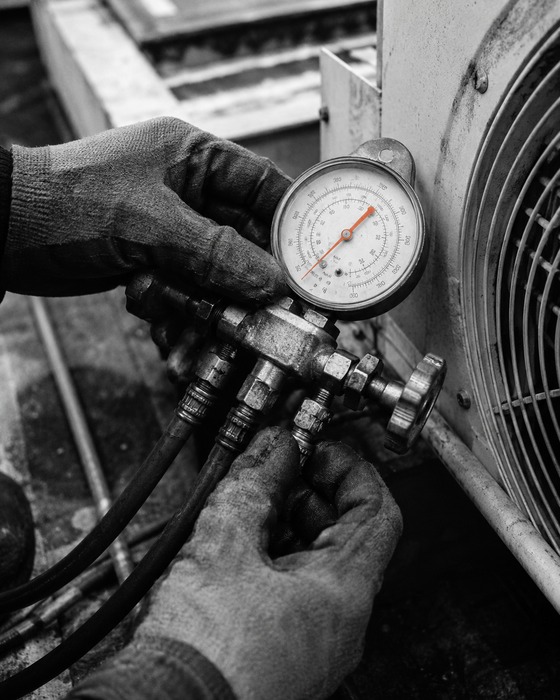
You keep the whole building breathing.
Heating, cooling, refrigeration — HVAC/mechanical techs are needed in every climate, every season, every building type. This guide breaks down real pay by experience level and what actually moves the number.
HVAC / Mechanical
The U.S. Bureau of Labor Statistics tracks this trade under "heating, air conditioning, and refrigeration mechanics and installers" — that category posted a median annual wage of $59,810 as of May 2024, the most recent OEWS data available. The BLS also projects employment growth of 9% from 2024 to 2034 — much faster than average, driven by energy-efficiency retrofits and electrification.
Entry level ($18–24/hr) is where most people start in this trade — typically through a formal apprenticeship, trade school program, or on-the-job training under a journeyman.
Journeyman ($30–44/hr) is where independent, unsupervised work authority kicks in — the point where most of the trade's workforce sits.
Master / top end ($45–60+/hr) covers senior specialists and crew leads — the people called in when the job is too complex or too urgent for anyone else.
NATE-certified techs command a measurable premium, especially on commercial work.
Commercial and industrial refrigeration techs routinely out-earn residential-only peers by $10,000–$20,000 a year.
Extreme-climate states create year-round demand and push wages well above the national median.
Heat pumps, building controls, and data-center cooling are the fastest-growing, highest-paying niches in the trade right now.
“Diagnose a dead unit in a 100-degree attic, fix it in an hour, and the homeowner treats you like a hero. Because you are.”
— A day in the life, HVAC / Mechanical
Two-way street. Workers get matched to real openings. Employers get first look at qualified hvac / mechanical talent before we go public with the board.
Jobs In HVAC is one of 13 trade-specific sites in the Careers In Trades network.